
What’s included
Nobody walks past a man rolling cigars.
He arrives before your guests do, works from a table you provide and almost nothing else, and rolls without stopping for as long as you have booked him. Everyone leaves holding a cigar that was made in front of them.
Before anyone arrives
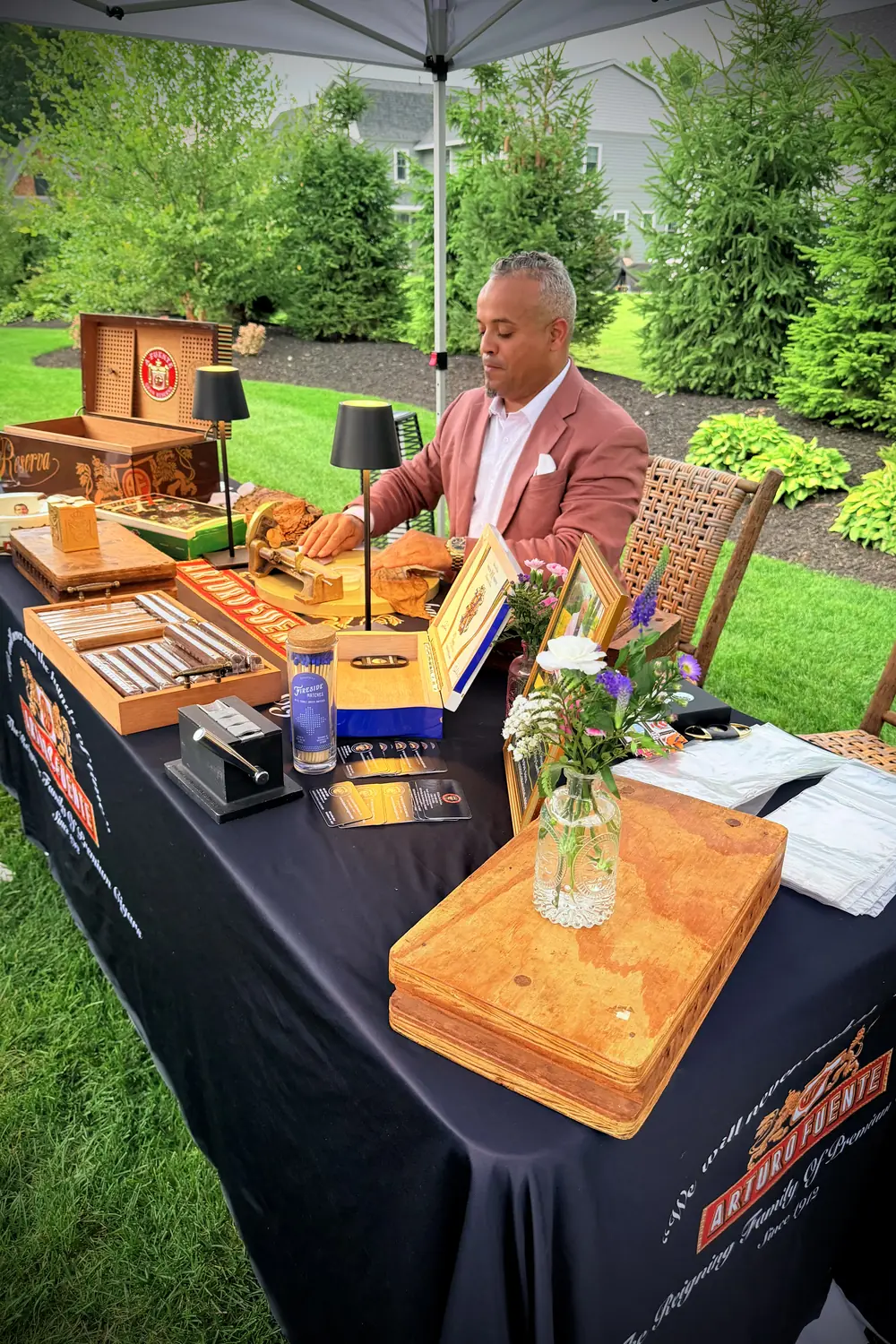
You provide a table. He brings everything else.
He and his assistant set up the whole workshop in forty-five quiet minutes, while the room is still empty.
Twopairsofhands,sothelineneverstalls
An assistant works beside him: one pair of hands rolling, the other keeping the room supplied. At two hundred guests the line keeps moving all evening.
Nothingforyoutorent,borroworfind
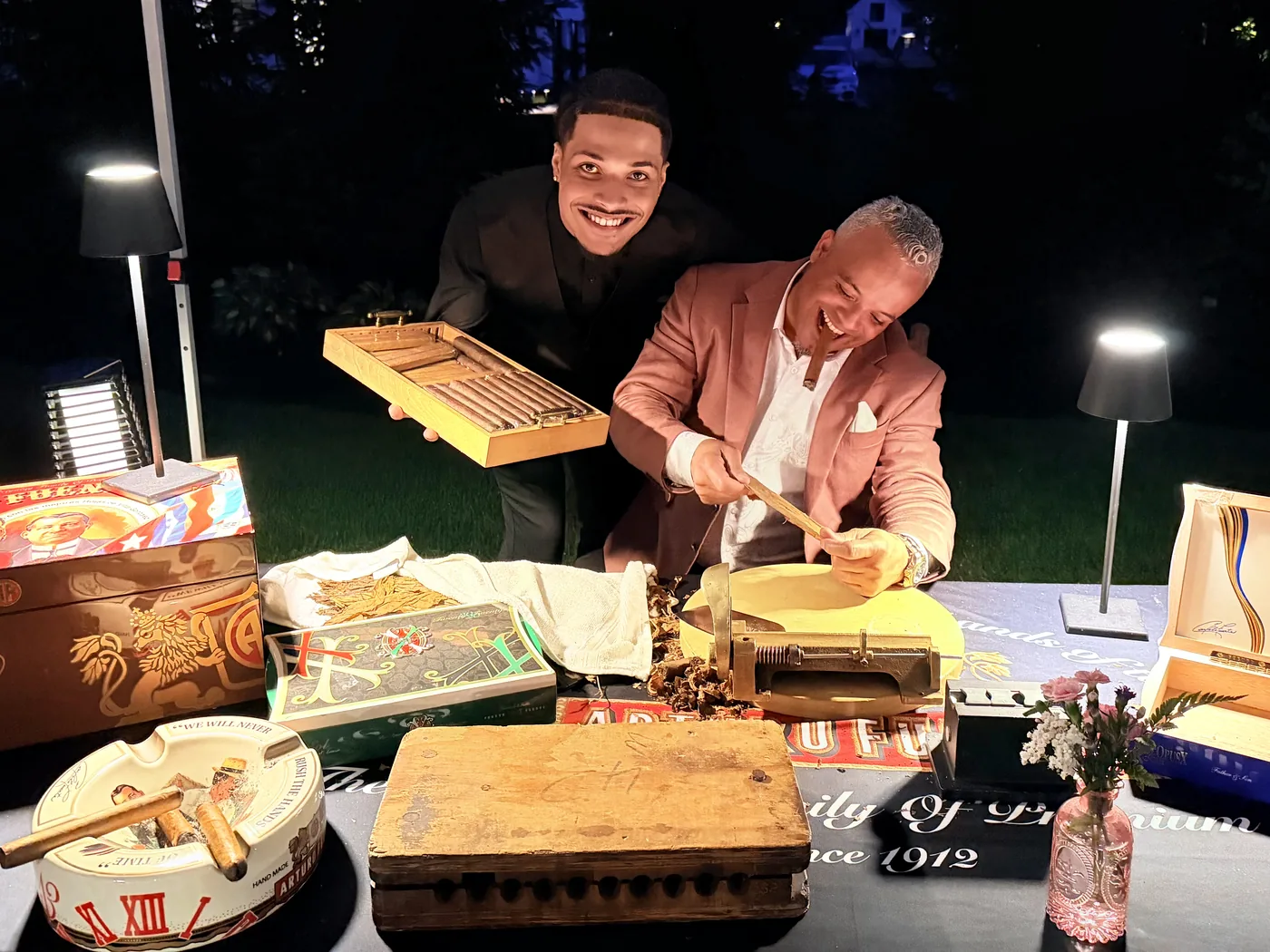
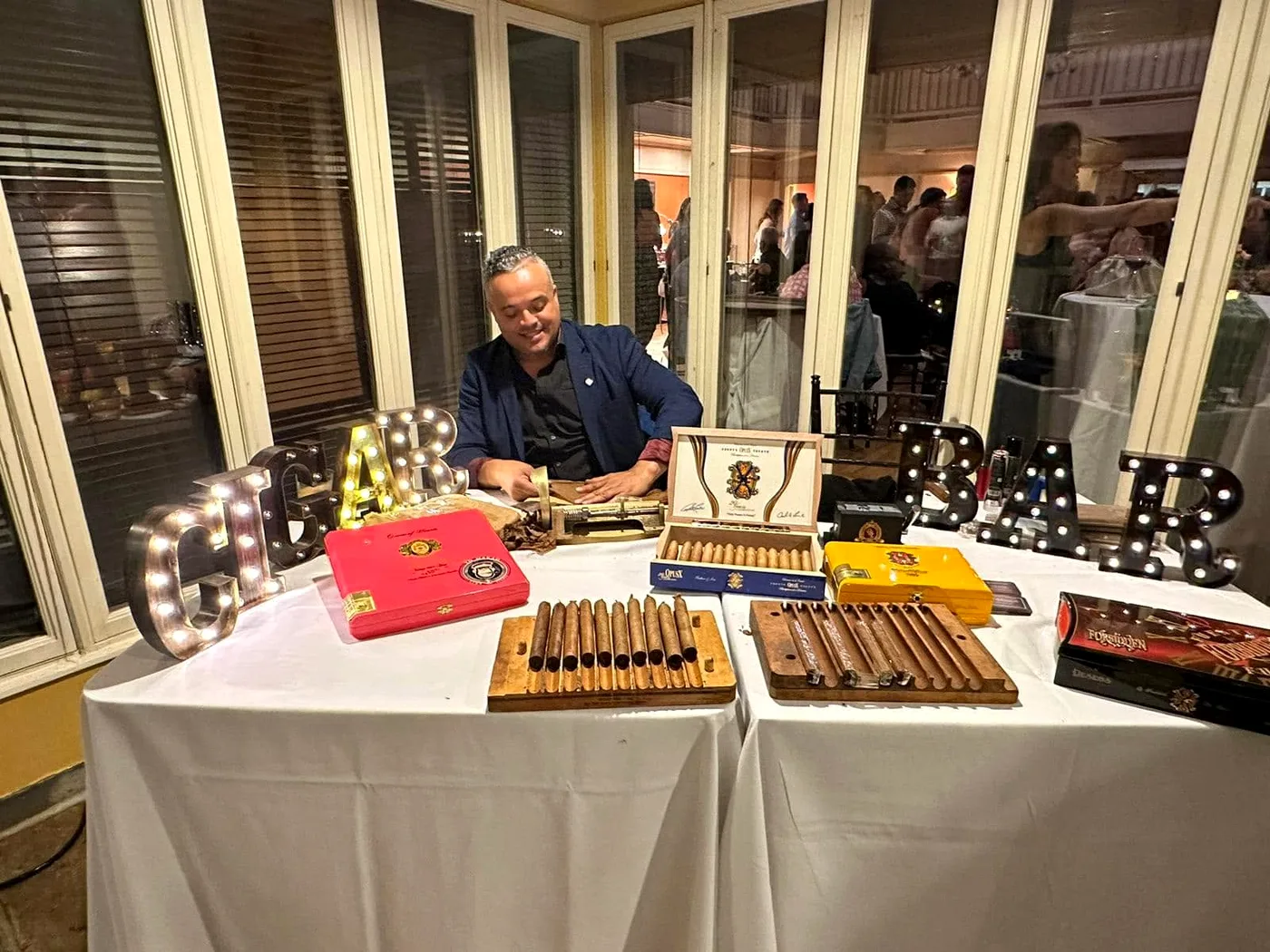
Boards, presses, the humidor, the chaveta, cutters, lighters, ashtrays, and the lamps that light the table. Your venue provides the table and a socket; the cloth that goes over it is his.
Readyanddressedbeforethedoorsopen
By the time the room fills, the tobacco is laid out and the first few are finished and resting. Guests find it standing there, as though the evening had been planned around it.
What they take home
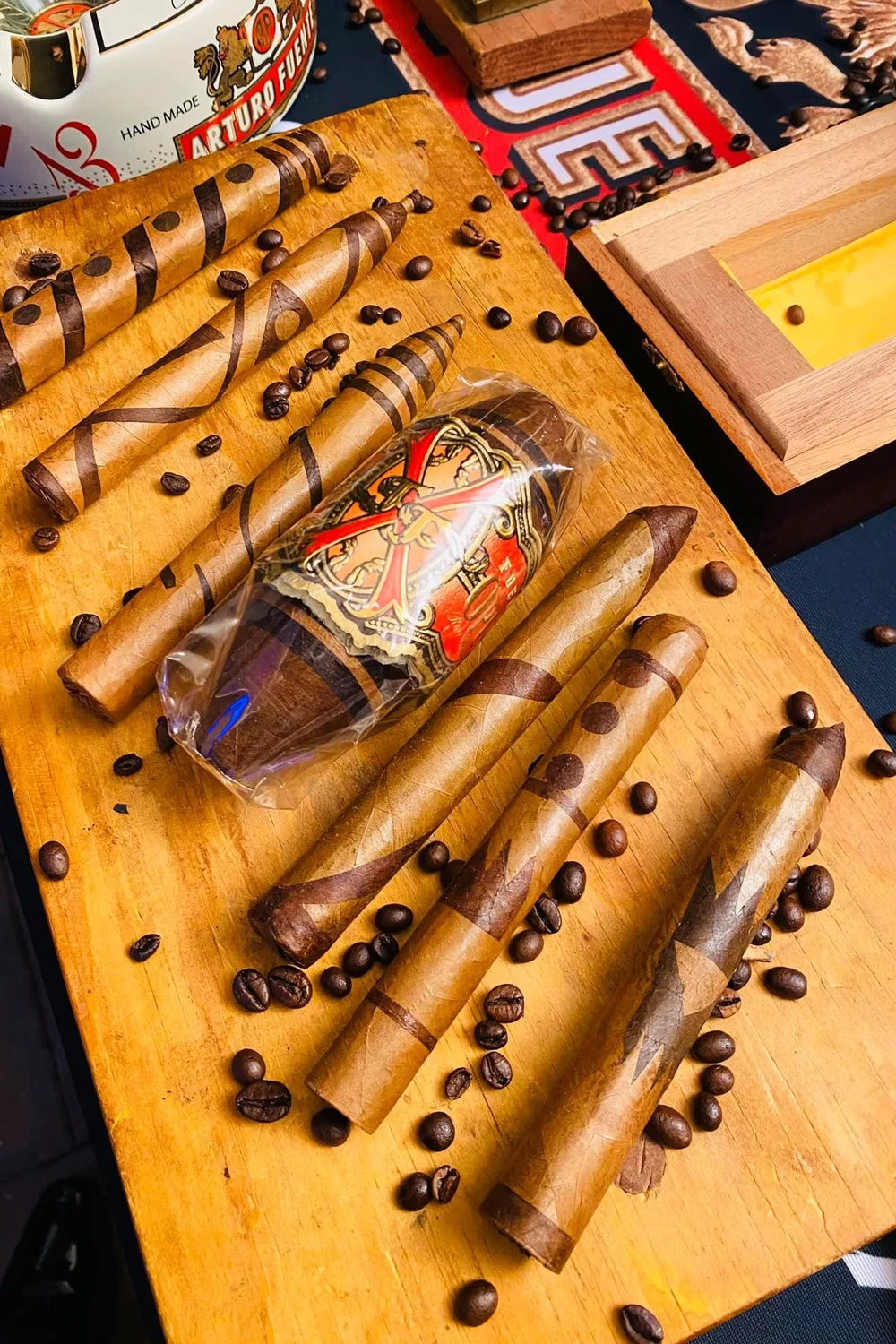
The only part of the evening that goes home in a pocket.
Long after the music stops, this is what they still have.
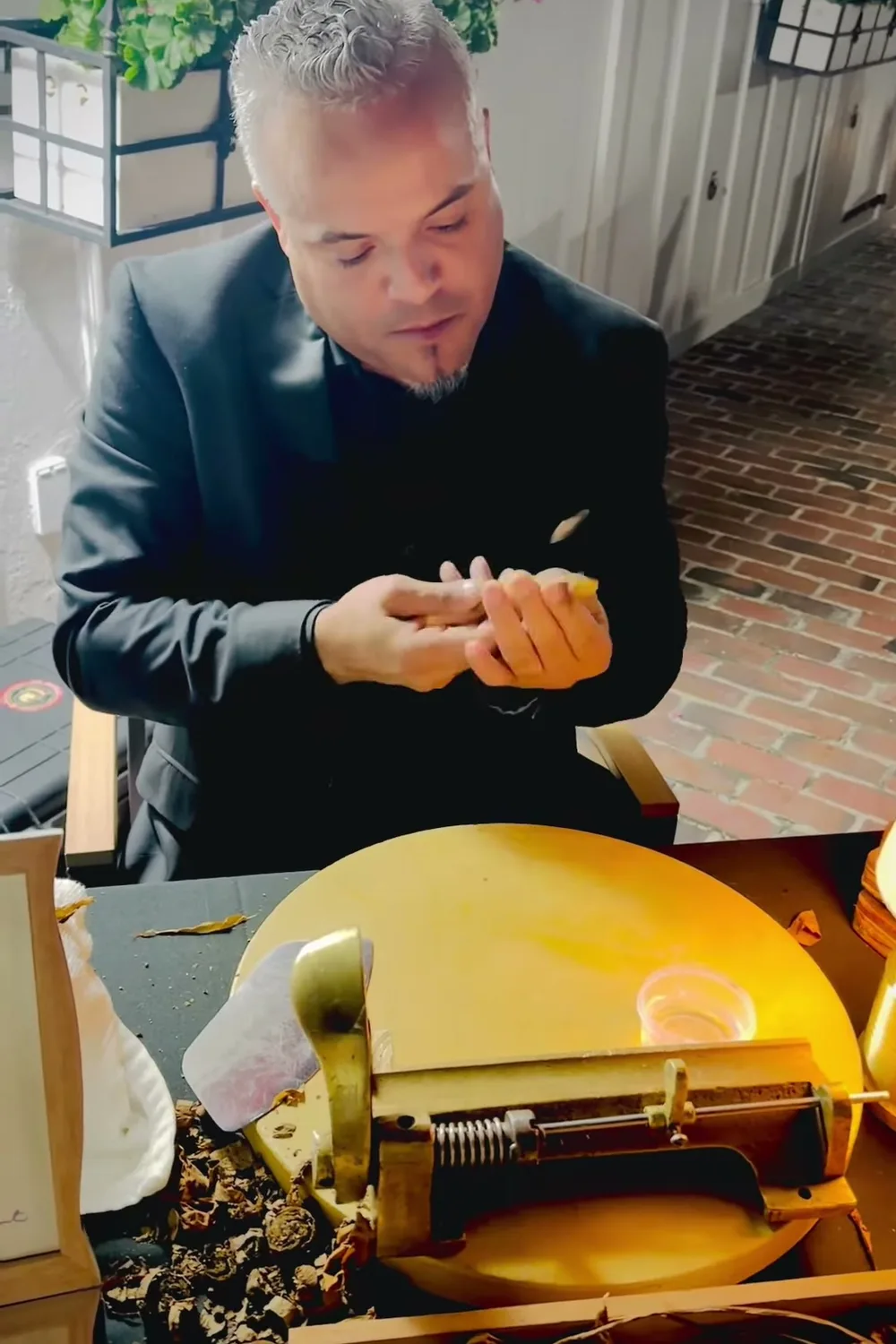
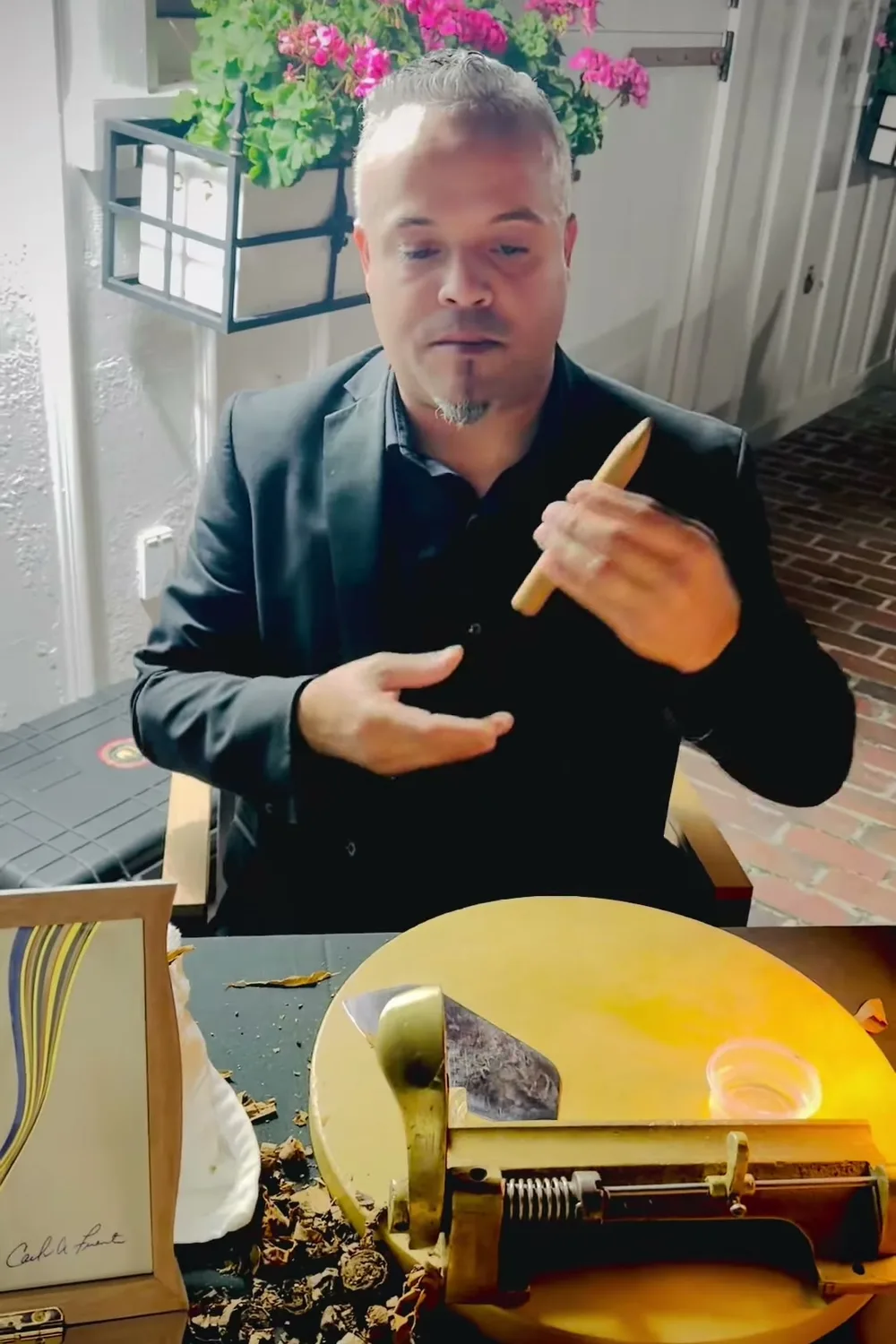
It is built while its owner watches: long-filler Dominican tobacco gathered into a binder, a wrapper drawn tight with a blade that has no other purpose, and a few minutes under the press.
Those hands are among roughly twenty-eight in the world cleared to roll the Fuente Fuente Opus X, a figurado whose shape gives away a poor roll long before anyone lights it. Here that is not biography: it is the standard of the cigar your guest is holding.
With the power of the Opus in my hands.
The night
The part of the evening you will not have to manage.
For whoever is running the room: this is exactly how he fits into your night.

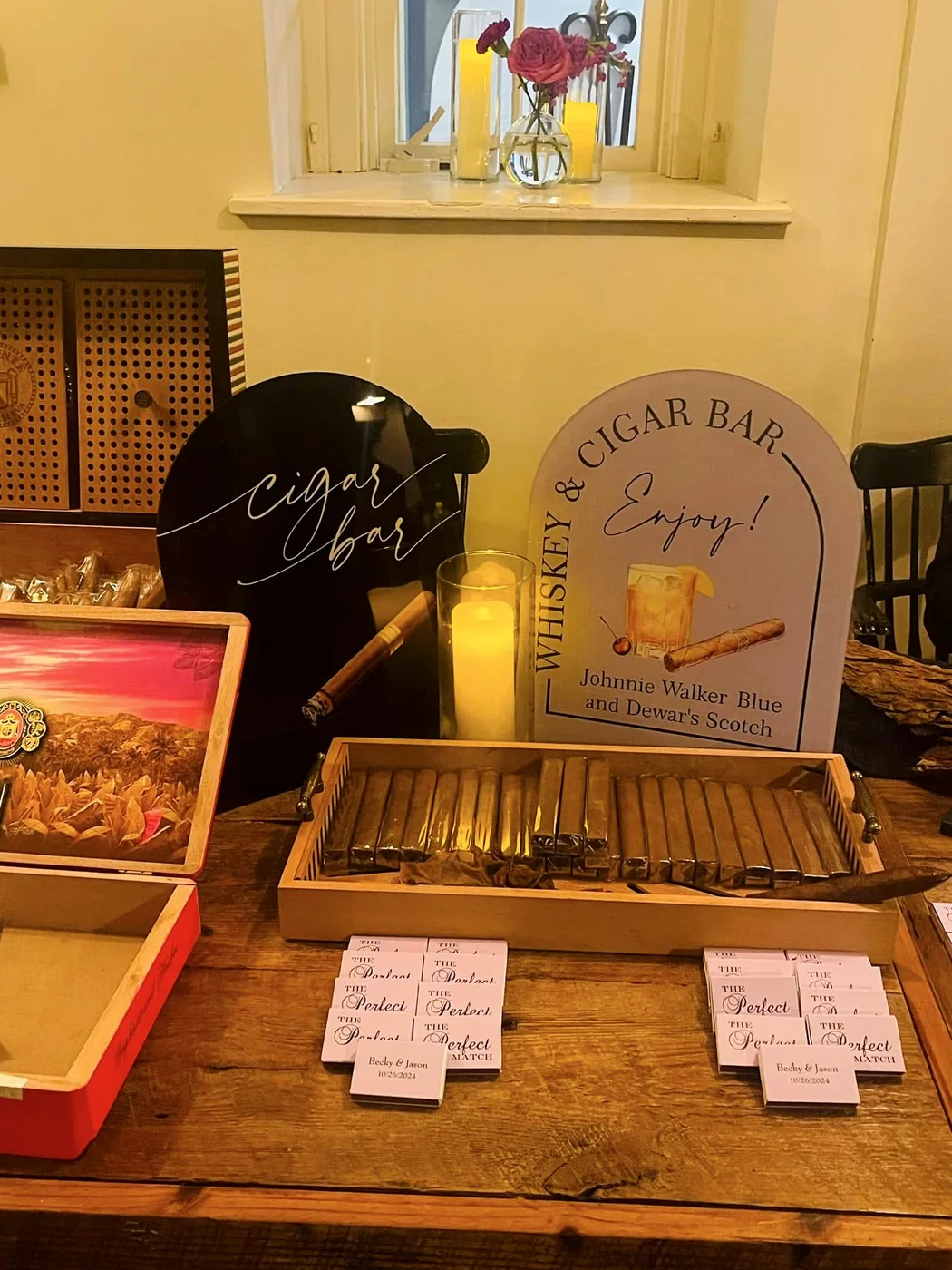
Forty-five minutes ahead of everyone
He finds the table, dresses it, sets out the boards and the press, and rolls the first cigars while there is still nobody to watch. None of the setting up happens in front of a guest.
He works to your timeline, not to his
Cocktail hour, the lull after dinner, the stretch once the speeches are over and the room needs somewhere to go. Name the window and he will be rolling inside it.
The pace does not change for the room
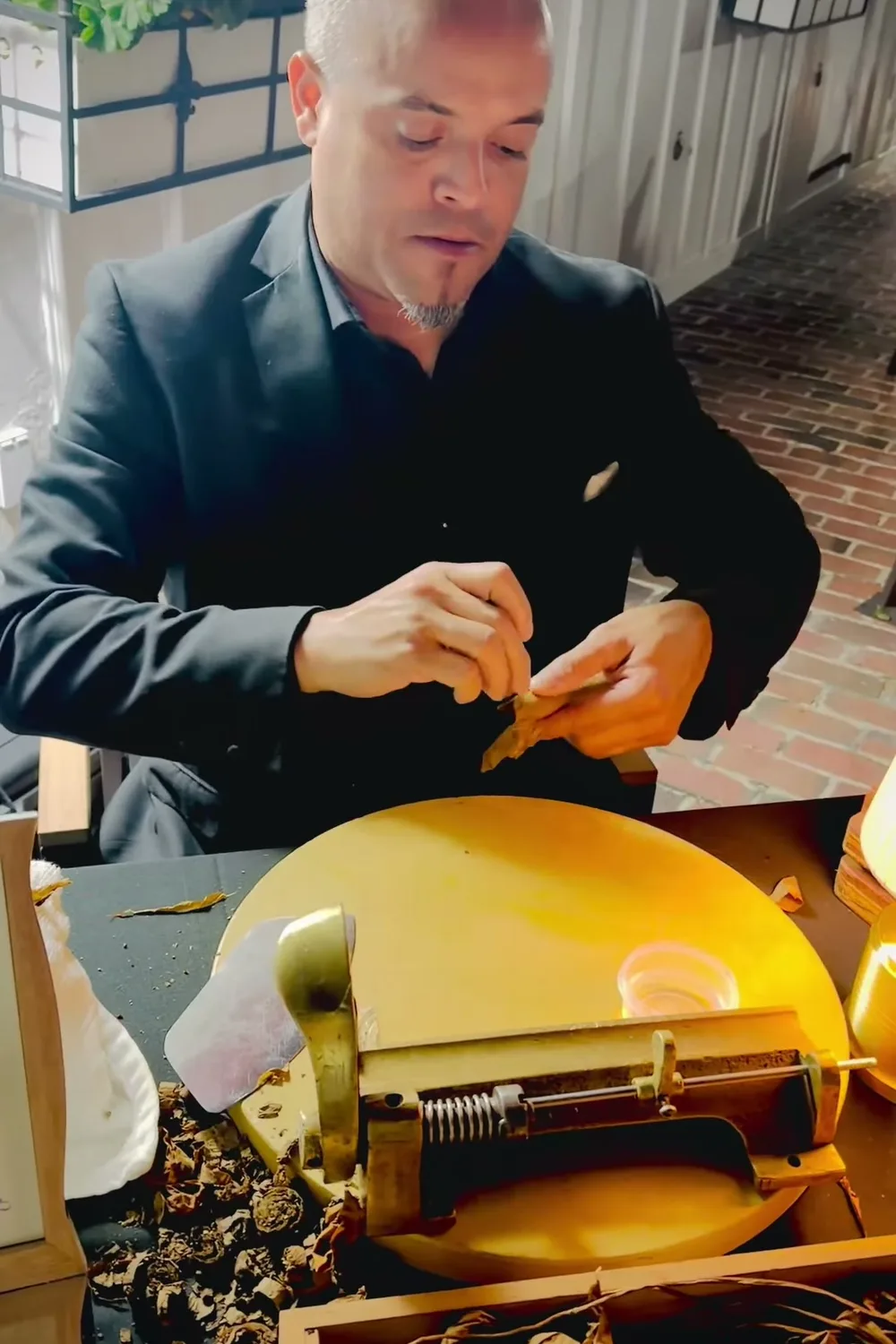
Leaf, blade, press, for the hours you booked, at the same rhythm whether four people are watching or forty. That steadiness takes twenty-five years at the table.
The room comes back the way you handed it over
The station is down in twenty minutes and the ash and the offcuts leave with it. By the end of the night the only evidence he was there is what your guests are carrying.
Past events
Now picture it in your evening.
Everyone remembers the table.
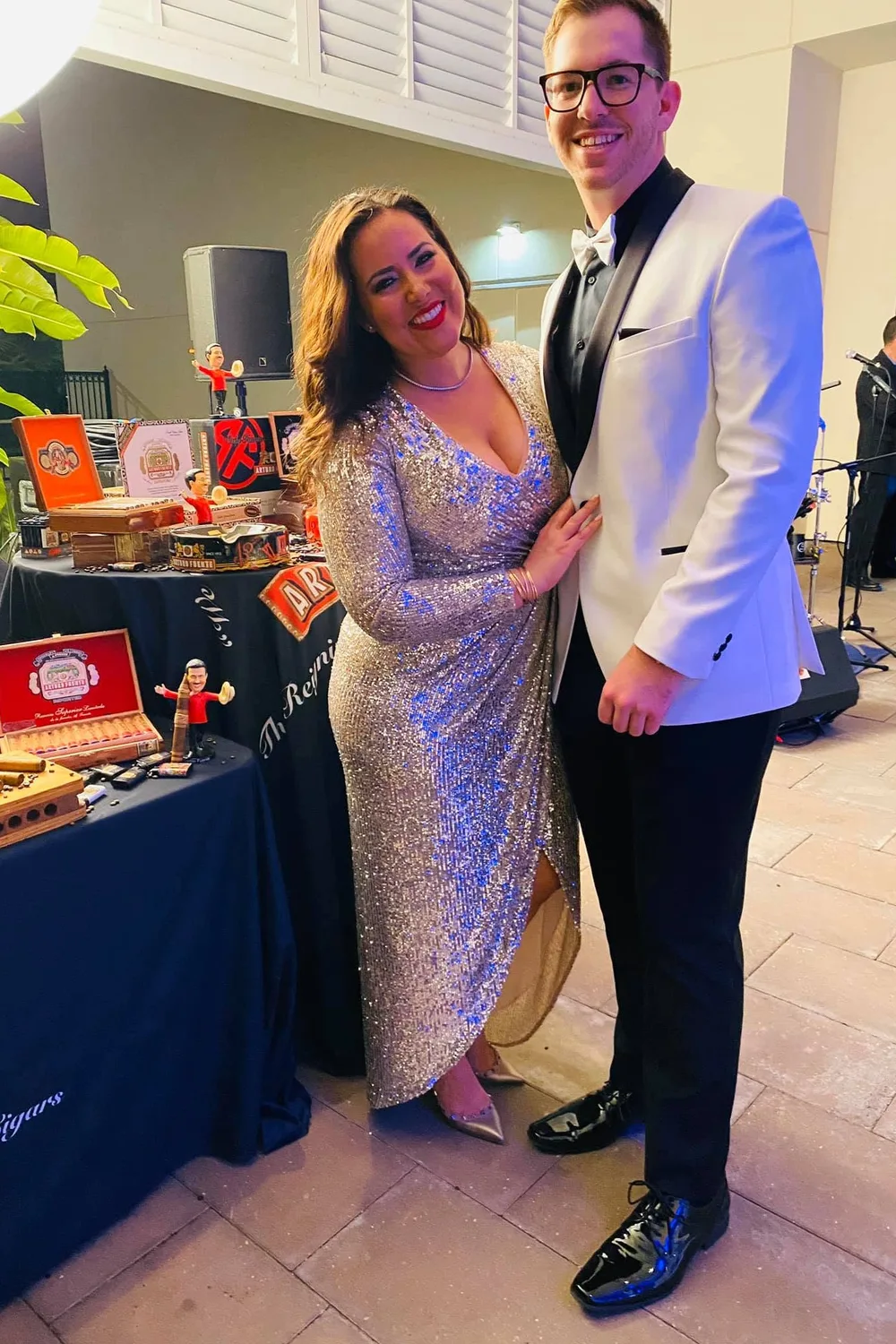
Every one of them has stood at it while he worked. That is the part of an evening people describe afterwards, to everyone who missed it.
The owner also rolls the house brand, which is very good. He started rolling for Fuente when he was fourteen and soon became one of the Opus X rollers. He certainly knows cigars and tobacco.
How it scales
You do not choose a package. You count the room.
A cigar per guest is how the trade sizes an event and how he sizes yours. The count settles the hours; nothing else about the evening moves.
- 150cigars2 hours at the table
- 225cigars2 hours at the table
- 300cigars3 hours at the table
- 400cigars3 hours at the table
Expecting more than 400 guests? Big crowds are welcome: he plans the evening around yours.
After that, the only open question is the date.
Check availabilityBefore you ask
A six-foot banquet table — yours; the cloth is his — a chair, a bin, and a socket within reach of the lamps. Six by four feet of floor, or ten by ten if you want seating around him. The one condition that is not negotiable is that the table faces the room: pushed against a wall, the work stops being something anyone can watch.
Almost always, and it is your venue’s decision rather than his. Nothing is lit at the table, which is why rolling is permitted in a great many rooms where smoking is not; in those, he works inside and guests step out with what he has made them.
Not from the table. What carries is the leaf itself — nearer cedar than ashtray — and it stays within a few feet of the station.
He needs cover over the table and no wind crossing it; a tent, a porch or a wide doorway all work. It is settled with your venue when the date is booked, not on the morning of the event.
The first fifty miles from Bethlehem are included, which covers the Lehigh Valley and the nearer parts of New Jersey. Beyond that there is a per-mile rate, counted one way and worked out against your actual address before you commit to anything. Weekends carry no surcharge.
A deposit holds it: the moment it clears, your date is on his calendar. Not ready to pay yet? You can hold it for 48 hours without a card.
They can: your logo, your names, your date. Bands are ordered ahead of the event and quoted separately, and they are reliably the part of the evening that ends up photographed.
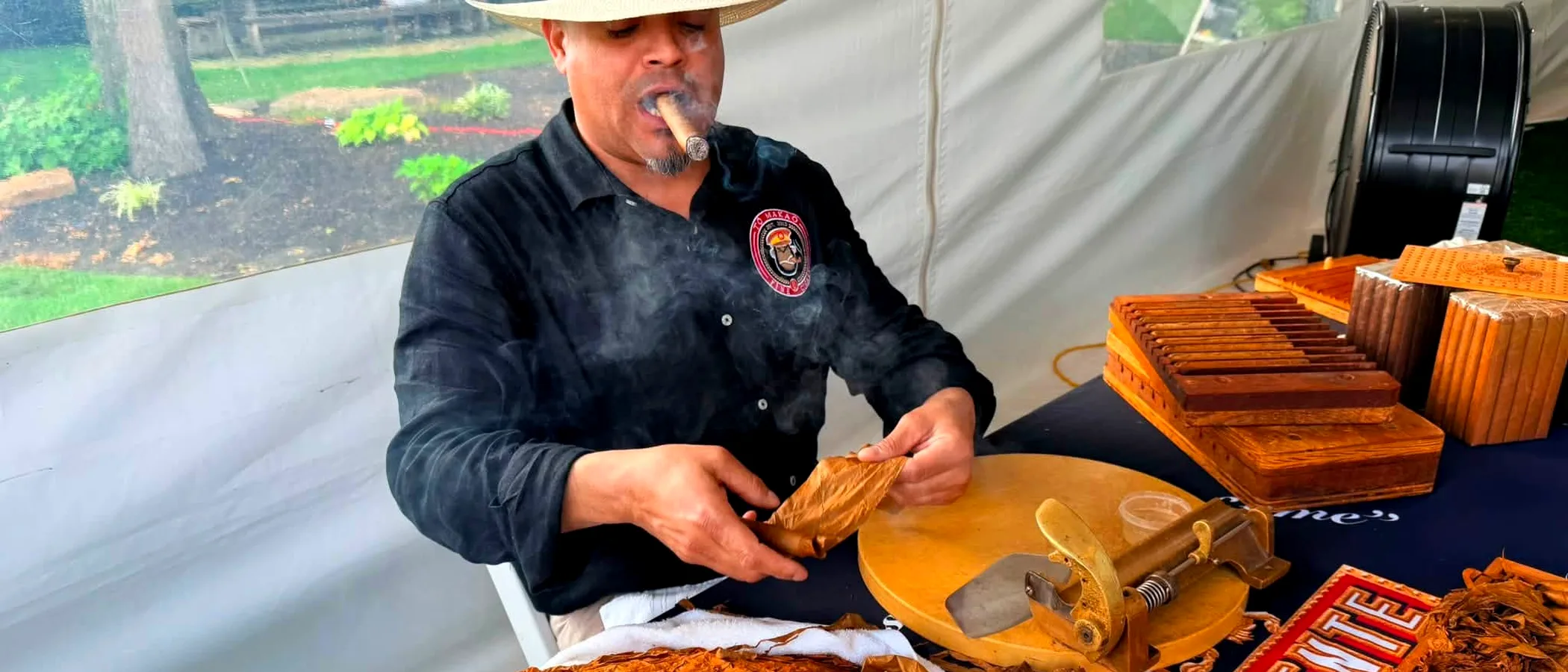
Some evenings are commissioned, not booked.
Formula 1 chose him as official cigar roller of the Miami Grand Prix. Hublot keeps bringing him back, from Las Vegas to Chicago to Canada, and Cars & Cigars in Detroit had him four years running. Every one of those evenings began with a brief rather than a date, and the work was shaped around the brand, the room and the guest count before anything else was agreed. Send yours and he will answer with a proposal.
Send a corporate brief